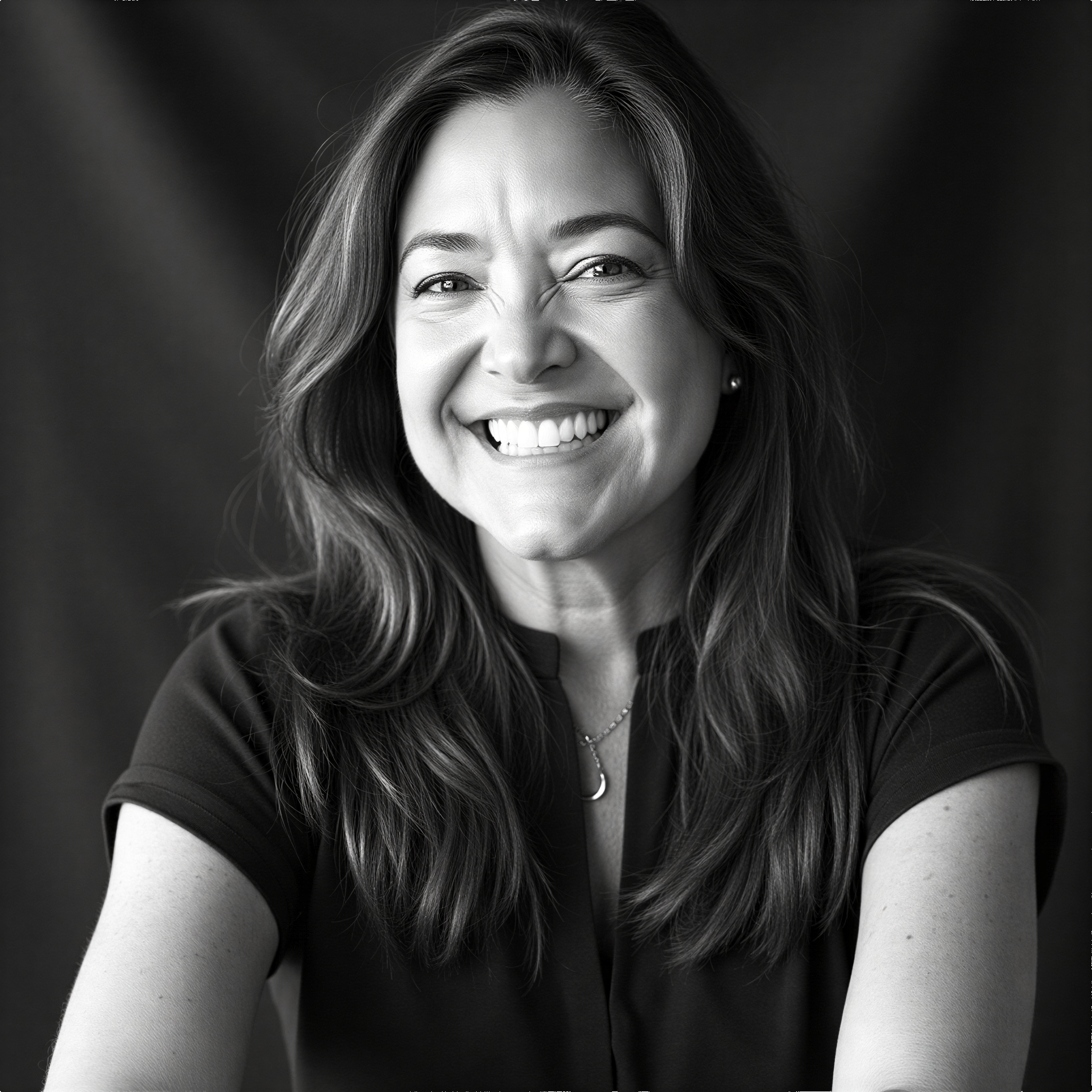
Screenwriter · Cultural Producer · Artist Trust Fellow (2026)

Tobi Iverson

Tsimshian · Turtle Mountain Chippewa

Northwest Coast Historical Epics  ·  Where Myth and History Collide
Tobi Iverson
About

Tobi Iverson writes Northwest Coast historical epics.

Open ocean crossed by canoe. Formline carved into everything a person owned.

People who have lived with this land for thousands of years. Not on it.

She is the great-great-granddaughter of Arthur Wellington Clah, who kept the only known Indigenous diary of the nineteenth-century Pacific Northwest Coast — sixty-nine volumes, fifty years, 1859 to 1909. She writes from his journals, from family history, from anthropology, and from years spent with the material culture of the coast — in archives, in museums, and with the people who carry it now.

She writes history as fiction.

The written histories are often incomplete, contradictory, and shaped by the perspectives of the people who recorded them. She isn't correcting them. She isn't a documentarian. She tells this history through real people, imagined the way she sees them. That's more interesting to write, and she thinks it's more honest — she isn't a historian, and everything she reimagines sits on the work of the academics who kept that knowledge and researched it.

Where the history matters, she keeps it accurate. But the story isn't the record. It's the human part. Emotion, and the choices people made under impossible pressure.

She writes about people whose voices have been muffled or distorted by those who benefit from silence. They are defiant. Angry. Left to work out what to do with grief they inherited. Heal it, or carry it and keep going.

She always knew she was Alaska Native, and she knew her tribe's name — mispronounced for years by people who meant well. There wasn't much a family could find then. What they could, they gave her. They were proud of it before she was.

She did not grow up in the culture she writes from. No reservation. No art on the walls. For a long time she wished she weren't Native at all — it wasn't respected or desirable, and she carried it as a liability.

She went looking anyway. She couldn't not do it. She tried.

She joined the cultural dance group. She tried her hand at cedar bark harvesting, to weave hats and baskets. She was a terrible weaver. She couldn't sew a button on her blanket. Her drumming was always enthusiastically off beat. So she stuck with dreaming, reading, and writing.

She is drawn to the Northwest Coast — its stories, its art, its myths — the way some people are drawn to music or mathematics.

The elders and community members she found as a young woman changed her. People who knew her grandparents. Who carried the culture with such pride and certainty — this is who we are, no matter what's happened. She read about the culture. But through them, she felt it.

Long before film, she led federal partnership programs across the Northwest, in formal relationship with tribal nations across four states. She worked in government, in tribes, in real estate and small business, and learned the craft on her own time.

She tells these stories not to claim them alone, but to carry them, alongside the community still holding this world today.
Featured Work
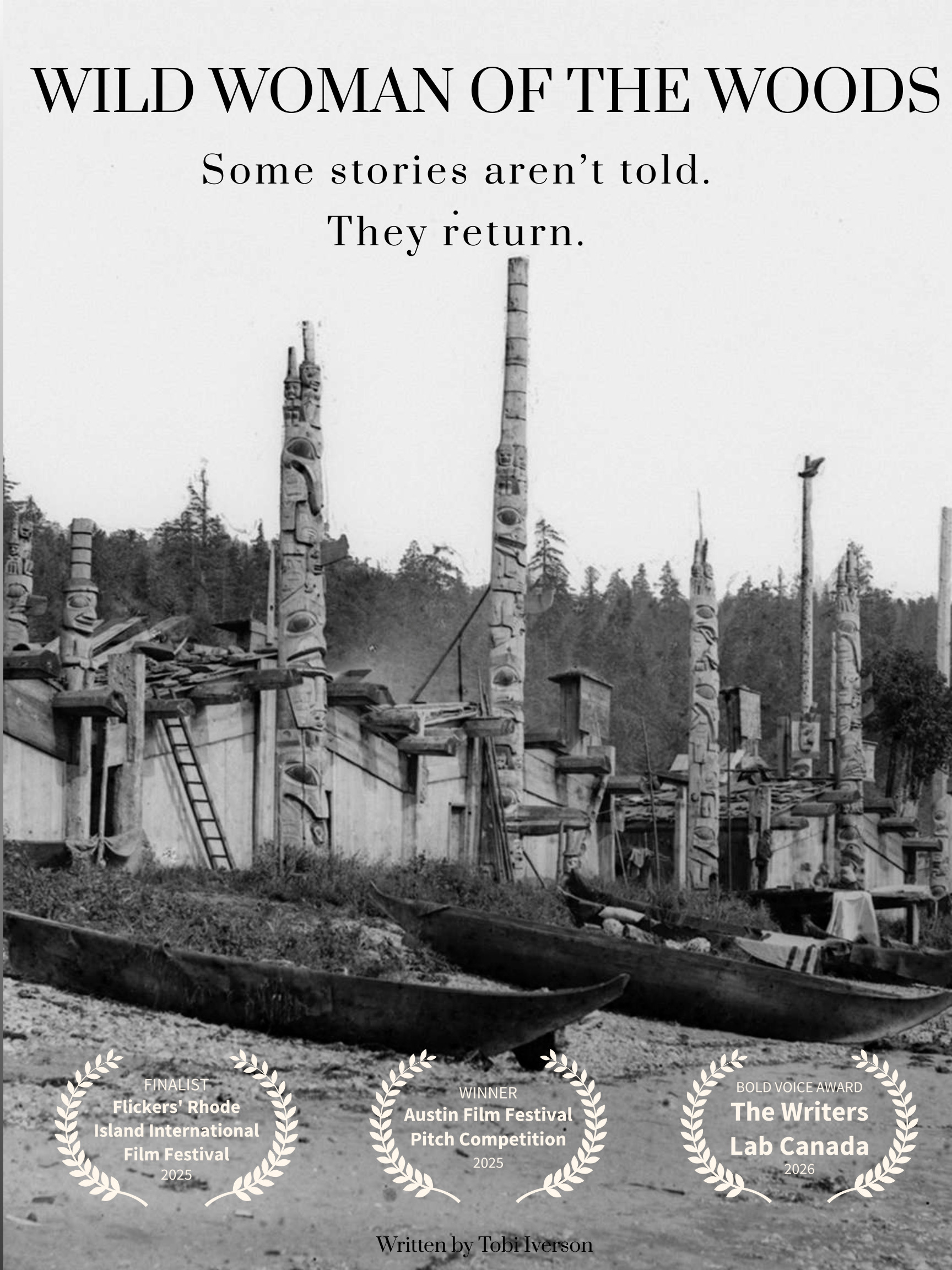
Wild Woman of the Woods

Feature Film

Thrown from a cliff at birth, she survived. A castaway daughter carrying a volatile shamanic relic must hunt down the architect of the plague — the most feared chieftainess on the coast — or watch her world be erased forever.

Format Feature Screenplay
Setting Northwest Coast, 1862
Genre Historical Epic · Mythic Thriller
Source Diaries of Arthur Wellington Clah, Wellcome Collection, London

A completed feature and the foundation of a limited series — a self-contained epic built to expand across a season.

Also in development as a stage adaptation.

Visit the Film Site →

Full pitch, coverage, and script requests: wildwomanofthewoodsfilm.com

Million Dollar Mask

Feature Screenplay · Next Project

Seeking fame beyond fortune, a tech billionaire uses AI to make a million-dollar Tsimshian mask speak, only to awaken an orphaned being corrupted by bitterness since 1862. As each demands recognition from the other, their battle of wills drives the man toward madness while forcing both to choose who they will become.

Format Feature Screenplay
Setting Contemporary
Genre Speculative Thriller

Set in the world of Wild Woman of the Woods.

Inspired by the 2008 exhibition Treasures of the Tsimshian from the Dundas Collection at the Museum of Anthropology.

DAXKA

DAXKA

Vertical Micro-Series

They bait her. She snaps. And every time she snaps, she slips three hundred years back into a raid where snapping gets her whole clan killed.

Format Vertical Micro-Series · 60–90 second episodes
Setting Contemporary · Northwest Coast, 1700s
Genre Sports Drama · Supernatural

Part of the Wild Woman of the Woods Universe.

Why I wrote it →
Recognition

Recognized by film festivals, fellowships, and industry readers across nine countries and three continents.

Featured Recognition
Austin Film Festival
USA
Pitch Competition Winner
2025
WorldFest-Houston
USA
Silver Remi Award · Long Script
2026
Artist Trust Fellowship
USA
Fellowship Award · All Disciplines
2026
The Writers Lab Canada
Canada
Bold Voice Award
2026
Flickers' Rhode Island International Film Festival
USA
Finalist
2025
London International Screenwriting and Film Festival
United Kingdom
Feature Screenplay Finalist
2026

United States · Canada · United Kingdom · Germany · Sweden · Switzerland · Iceland · Russia · JapanBerlin · Tokyo · London · Montreal · St. Petersburg

The Verdict

"A writer who knows exactly what they are doing and why."

Santa Barbara International Screenplay Awards · Professional Analysis

"A landmark film: poetic, political, and unforgettable."

Judge ML · PAGE International Screenwriting Awards

The Journey
Vancouver · 2008
Museum of Anthropology, UBC.
Treasures of the Tsimshian from the Dundas Collection.

Gathered on the north coast in 1863. Sold at auction in New York in 2006 for seven million dollars. Forty-eight of them came home for four months before they went to their buyers.

I went to the opening. Tsimshian dancers. Elders. Leaders from Prince Rupert. There were tears. There was anger.

Then I walked through the exhibition alone.

I had seen these things before. In college. In art books. In museum catalogues.

Now they were in front of me. My ancestors made these. Held these.

A carved spoon stopped me. Then a grease bowl. Then another. There were so many. They put that much thought into a thing you eat with. Every piece marked by clan or family, or telling a story.

I wanted to know why.

I felt those objects speak to me through the glass. I know how that sounds. It's what happened.

I didn't grow up in this culture. I wasn't raised with these objects or these traditions. But standing there I thought: the old ones wouldn't care. They wouldn't ask what I knew. They wouldn't judge me for what I hadn't been taught.

I left knowing I wanted to write these stories.

I didn't know yet what form they would take. I only knew I wanted someone else to feel what I felt in that room.

London · 2023
Wellcome Collection.
Arthur Wellington Clah's journals.
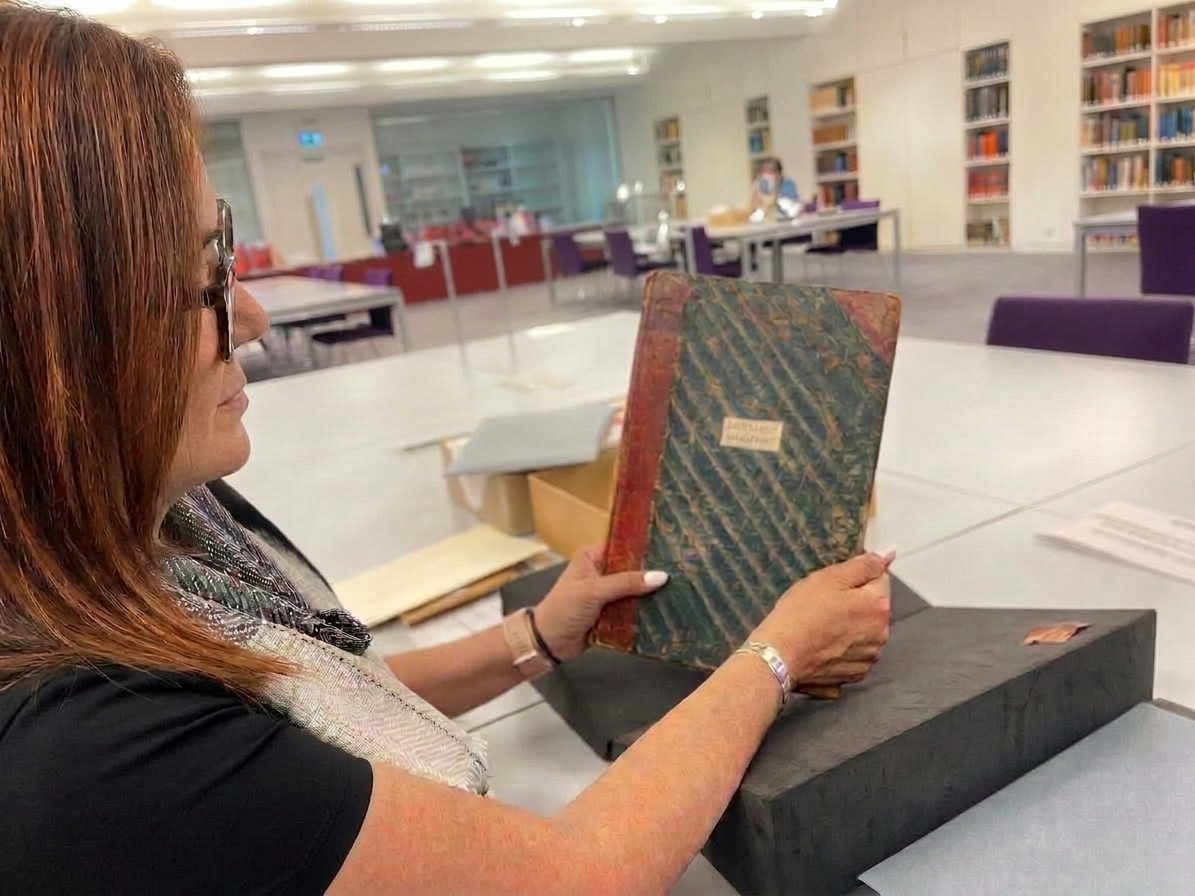
Tobi Iverson holding a bound volume of Arthur Wellington Clah's journals in the reading room at the Wellcome Collection, London
Wellcome Collection, London · March 2023.

Sixty-nine volumes. Fifty years of daily writing. More than 650,000 words in a language he taught himself in two months.

Arthur Wellington Clah — Tsimshian diarist, holding his journal

He capsized in the Skeena in January. Ice an inch thick. Half an hour in a freezing river. He swam to shore. He wrote it down. Then he kept going.

When smallpox reached Fort Simpson in 1862 — the epidemic at the heart of this film — Clah counted the dead himself. 363 Tsimshian. 266 at Fort Simpson alone. He wrote every number down.

He wrote his mission across every journal: 'writed by him to let all new people know about old People.' The only known Indigenous diary of the nineteenth-century Pacific Northwest Coast — written by my great-great-grandfather.

Tobi Iverson holding open pages of Arthur Wellington Clah's journal — Wellcome Collection, London

When I touched those pages in London, I knew I had to finish the screenplay.

Seattle · 2026
Burke Museum.
Bill Holm Center — Connections to Culture.
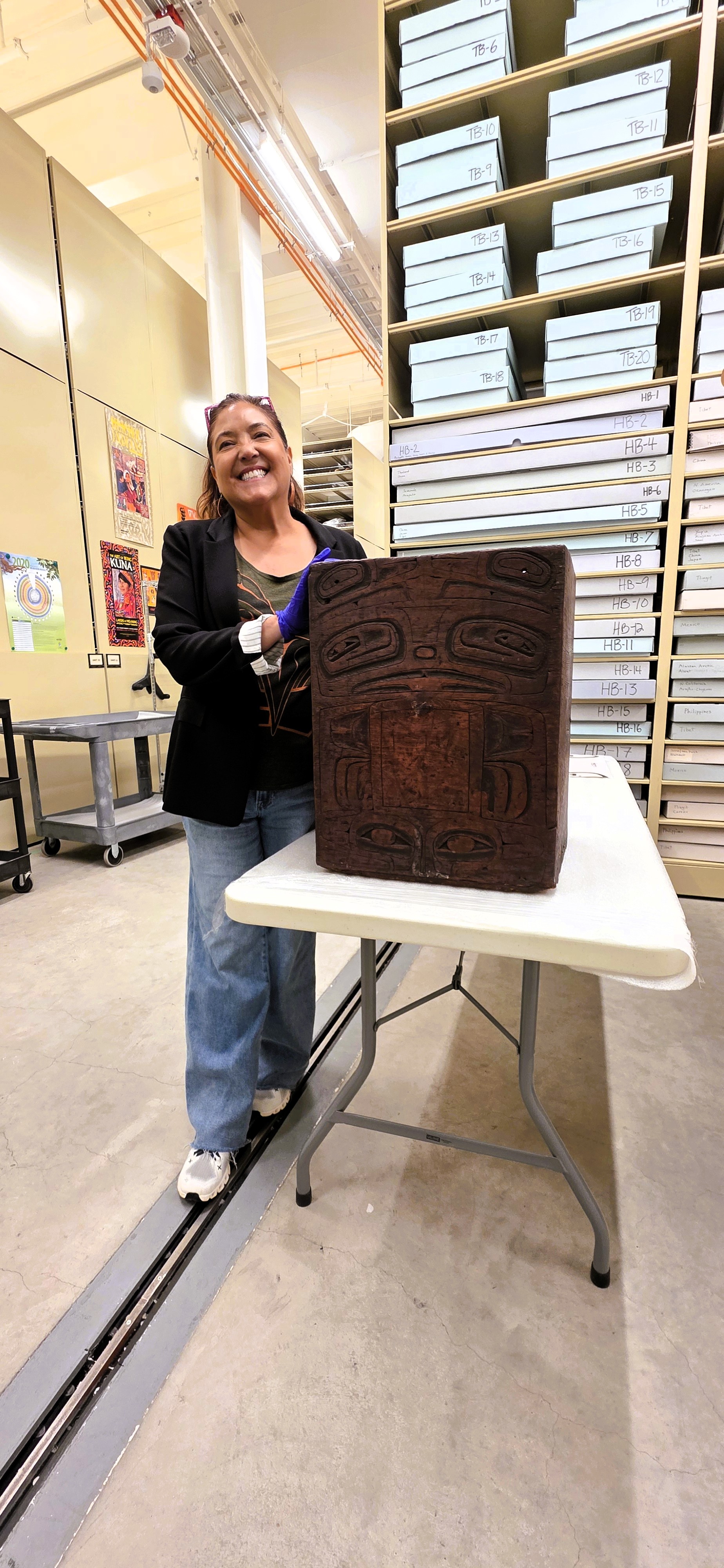
Tobi Iverson, wearing conservation gloves, standing beside a carved pre-contact bentwood box in the Burke Museum collections storage
Bill Holm Center, Burke Museum · 2026.

I was selected to study the Northwest Coast collection. Two days in the archives with objects dating to pre-contact — bentwood boxes, Chilkat robes, raven rattles, masks from the Nass River.

One box stopped me. Pre-contact. No lid. Lost somewhere across two centuries. A hole in the corner from a mouse.

I wore gloves. I put my hands on it anyway.

Bentwood box — Burke Museum collection, pre-contact

I asked how old. Pre-contact, they told me. But the wood it was made from — older. The dirt it grew in held the bones and dust of those ancestors. Much older than that.

I wanted it to speak. I half expected it to.

It didn't. But my heart did. My stomach did.

Clah knew boxes like this. He may have known this one. Nobody will ever know. But this is the research that cannot be replicated — because it is also inheritance.

The Obligation.
"If he could do that, I can finish a screenplay. That's not inspiration. That's obligation. The good kind."

I came to this material gradually — through archival research, family history, and reconnecting with the culture and history of the Northwest Coast. What I found was a great-great-grandfather who wrote against all odds for fifty years, in a language he taught himself, so that someone like me might one day find it.

His journals are a public record now, held for over a century at the Wellcome Collection. I came to them as a descendant — and chose to carry what I found forward, alongside the community still holding this world today.
The work continues in ongoing relationship with the institutions that hold this history and the Northwest Coast communities whose story it is.

The record-keeping did not stop with Clah. His grandson, William Beynon, became the leading ethnographer of the Tsimshian peoples — Franz Boas himself sought the family's collaboration.

He taught himself to write so new people would know about old people. I am one of the new people. One of the many he hoped wouldn't forget our families.

I hope to carry that forward through film.

Contact
Press & Media

For press inquiries, interview requests, and festival materials. Bio, high-resolution images, and project information available upon request.

Official Bio
Short and long-form biography available for publication and festival programs.
Press Kit
Full press materials for Wild Woman of the Woods including logline and synopsis.
Images
High-resolution headshots and project imagery available upon request.
Script
Wild Woman of the Woods — available upon request to industry professionals.